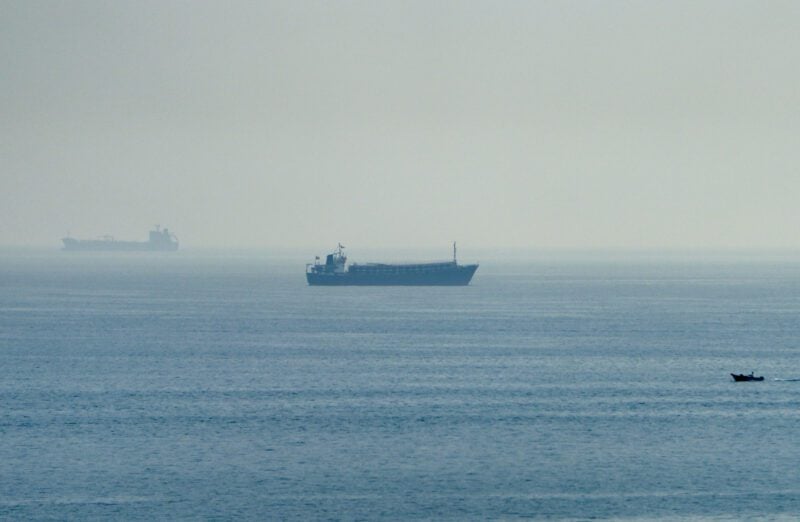
A tanker was disabled by an unidentified projectile while leaving the Strait of Hormuz, while a separate vessel was reported on fire in the northern Persian Gulf, gCaptain reported, citing two maritime security warnings issued by UK Maritime Trade Operations (UKMTO) on Monday.
UKMTO said the tanker was hit at 0839 UTC on October 23, but the verified report emerged three days later. All crew were reported safe. The agency did not name the vessel or detail its damage, and no assessment of potential environmental consequences was available.
The second warning concerned multiple third-party reports of a burning vessel about 63 nautical miles southeast of Al-Faw, Iraq. Its identity, crew condition, damage and possible environmental impact remained unknown. UKMTO designated the incident as suspicious activity, not a confirmed attack. Authorities were investigating, with the cause of the fire still unclear.
The warnings followed an October 25 advisory from the Joint Maritime Information Center (JMIC), which retained a SEVERE threat rating for Hormuz and said further deliberate attacks were highly likely. Its assessment for the wider Persian Gulf remained SUBSTANTIAL, citing five attacks there since October 7, including near anchorages and ship-to-ship transfer locations. JMIC had counted 156 confirmed regional maritime security incidents since March 1 before the latest verified tanker strike was disclosed.
The advisory also described an LPG tanker hit by an unidentified projectile on October 22, roughly seven nautical miles northeast of Limah, Oman. It later reached an anchorage off Khor Fakkan. JMIC said Iranian Revolutionary Guard Corps activity included attacks and attempted attacks, drone flights, surveillance and radio instructions directing commercial ships towards Iranian-controlled routes.
Shipping remained disrupted despite US efforts to support passage. JMIC recorded 101 US-facilitated transits during October 22-24, against a historical average of about 138 vessels daily in 2025. Those measures are not directly comparable: the US count covers assisted passage rather than all commercial movements. Separate tracking showed daily transits outside that system in single digits.
About 492 vessels were waiting outside Hormuz on October 25, according to JMIC, with concentrations near Fujairah, Khor Fakkan and other anchorages. US forces continued enforcing a blockade of Iranian ports while seeking to maintain passage for other shipping. JMIC warned of projectile strikes, possible renewed mining and electronic navigation interference; UKMTO urged caution and reporting of suspicious activity.