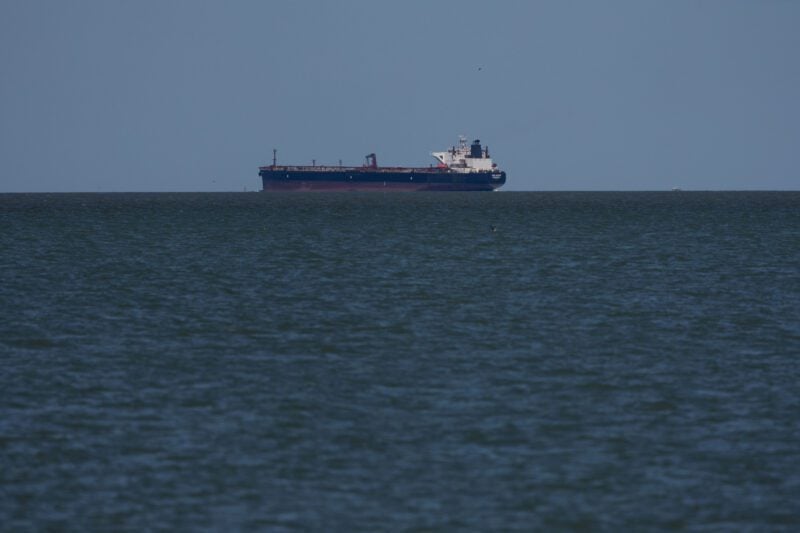
Middle Eastern oil shipments have remained resilient despite increasingly frequent and damaging Iranian attacks on merchant vessels around Hormuz, gCaptain reports, carrying Bloomberg reporting. Producers are using their own tanker fleets and transferring cargoes outside the strait to sustain deliveries, although estimates for October so far remain below prewar volumes.
The scale of the recovery is uncertain. Kpler estimates Persian Gulf crude and condensate flows reached 24.6 million barrels a day in the week to 18 October, while Vortexa puts the same period at 18 million. Both providers estimate flows before the conflict at no less than 18.5 million barrels a day. For October to date, their Middle East estimates stand at 16.7 million and 15.4 million barrels a day respectively, according to the report.
The providers compile their totals differently. Kpler combines Hormuz movements, net ship-to-ship transfers in the Gulf of Oman and exports from Red Sea and Gulf of Oman ports. Vortexa totals shipments from seven producing countries. Tracking is also impaired because most tankers have switched off their positioning signals, while satellite imagery is being withheld. Cargo movements may only become visible days later, prompting upward revisions. Convoy departures and shuttle operations create sharp swings between busy loading periods and quieter intervals.
Iraq is moving more oil through Hormuz, while Saudi Arabia is exporting from both its Persian Gulf and Red Sea coasts. Saudi output rose by a third in September to more than 8 million barrels a day after reaching a low not seen for over three decades in August. The UAE has raised production to a record, according to International Energy Agency figures cited by gCaptain. The UAE, Saudi Arabia and Kuwait have used their tankers to carry oil through Hormuz for transfer to customers’ vessels outside the passage.
Those operations face a worsening security environment. UK Maritime Trade Operations recorded 32 attacks around the Arabian peninsula in October so far, against 16 throughout September; some hit engine rooms, causing greater damage. At least one container ship has sunk this month. Regional flows have also endured the loss of Iranian exports following a US blockade of its ports, the report says. Both tracking firms estimate Iran shipped nearly 2 million barrels a day in February.