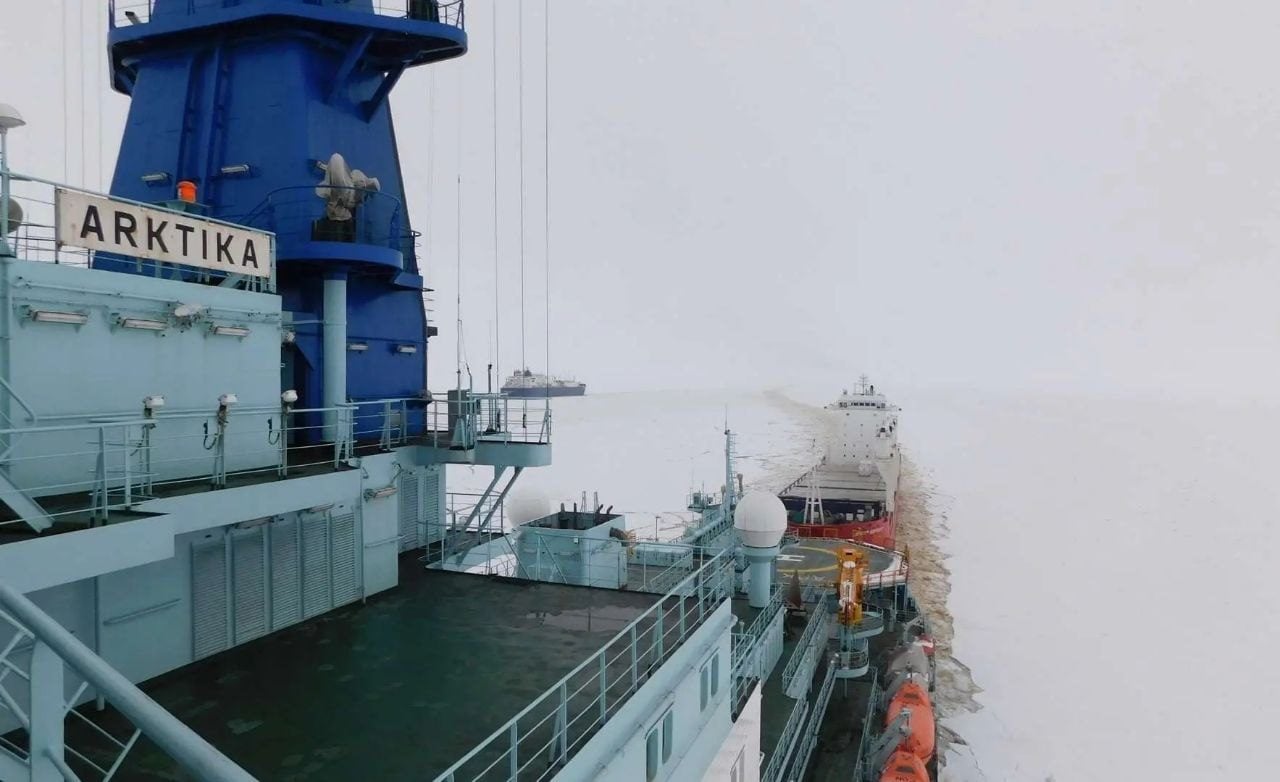
Russia expects transit cargo on the Northern Sea Route (NSR) to exceed 7 million tonnes in 2026, with oil shipments helping lift Arctic shipping activity despite Western sanctions, gCaptain reported. Vladimir Panov, head of Rosatom’s Arctic Directorate, said on 27 October that total cargo movements along the route would surpass 40 million tonnes, setting a record.
Transit cargo excludes commodities produced in the Russian Arctic and remains a relatively small share of overall traffic. Panov presented the route as a secure, efficient option, saying the summer-autumn passage between Asia and Europe was 30% shorter than the journey through the Suez Canal. However, independent tracking suggests transit volumes may finish below Russia’s forecast.
Norway’s Centre for High North Logistics (CHNL) identified 104 confirmed transits by 30 September, against 103 across the full 2025 navigation season. It estimated cargo at 3.7 million tonnes, compared with 3.2 million tonnes in 2025. Completion of most voyages underway at September’s end could bring the season close to 150 transits and above 4.5 million tonnes. Those preliminary estimates draw on vessel movements and available cargo information, rather than official statistics.
Oil has been a significant contributor to the increase. According to gCaptain, Russian oil shipments via the NSR reached approximately 20 million barrels between the opening of navigation in July and mid-October, nearly 50% above the previous year’s total. Difficult ice conditions nevertheless forced an August convoy of at least 15 ships, including eight tankers, north of Severnaya Zemlya to avoid the Vilkitsky Strait. The diversion added nearly 1,000 kilometres to the conventional passage.
Overall NSR cargo has grown from about 3.7 million tonnes in 2014 to more than 37 million tonnes in each of the past two years, predominantly through Russian resource exports. That remains well below President Vladimir Putin’s original 80-million-tonne target for 2024, when actual traffic was approximately 38 million tonnes. Western sanctions have delayed or complicated major Arctic oil and gas projects, constraining further expansion.
Potential additional volumes include crude from Rosneft’s planned Vostok Oil development and Novatek LNG redirected towards Asia. gCaptain reported that the EU’s planned Russian LNG import prohibition, beginning on 1 January 2027, could intensify the search for alternative buyers. Any resulting increase in Arctic shipments would depend on production, vessel availability, ice conditions and receiving infrastructure.